Institut de Robòtica i Informàtica Industrial (IRI), CSIC-UPC, Barcelona, Spain
September 7-9, 2026
About
Robotics and Software Engineering 2026 (RSE’26) is the fifth edition of an annual meeting to promote discussion and interaction between researchers. The main objective is to strengthen cooperation and dialogue, bringing together the communities of Robotics and Software Engineering. It is an ideal opportunity to exchange ideas on topics of interest, including (but not limited to): development of systems, software architecture, dependability, software reuse, software validation and verification, robot modeling, robot control architectures, autonomous systems, and multi-robot systems. For this reason, we encourage anyone to participate, particularly early career researchers, including master students doing research.
The format of RSE’26 meeting consists of short presentations from each participant with enough time for discussion. Researchers at different career stages are welcome to present their research, provide and get feedback from peers, engage into discussions and establish new collaborations. RSE is not a publication venue. Participants can present previously published work as well as unpublished work, including early ideas and work in progress, can be a published paper, an idea, a master thesis, etc. The main point is to encourage discussions, to give and receive feedback, and to create a network for new collaborations.
RSE’26 will take place at the Institut de Robòtica i Informàtica Industrial (IRI), CSIC-UPC, Barcelona, Spain, from September 7th until September 9th, 2026.
RSE’26 does not require any paper submission, however, an abstract about the research that is to be presented is required to apply.
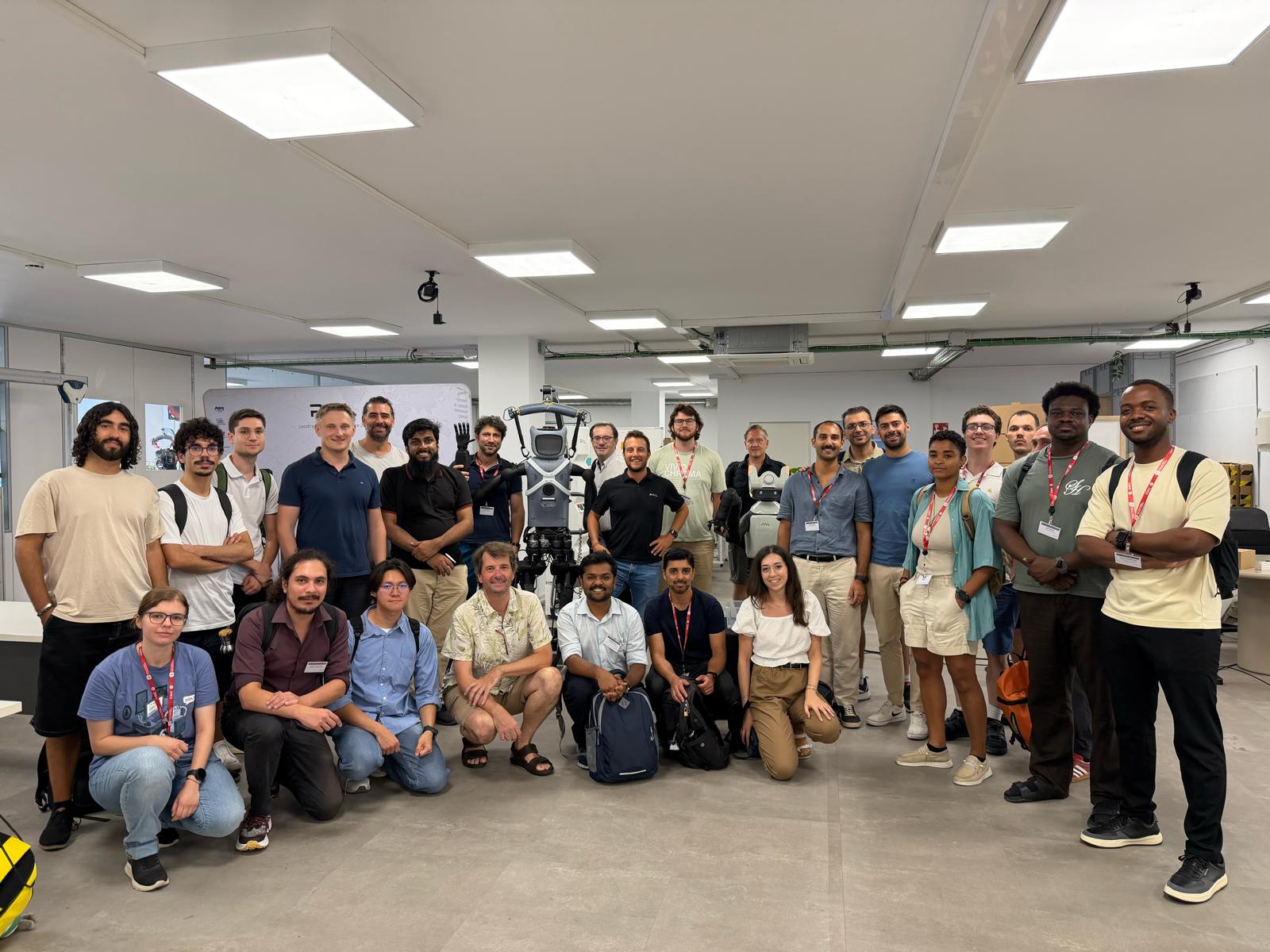
RSE'26 participants during the visit to PAL Robotics.
Application
Please note that every participant needs to give a talk, this is the event rule.
Important Dates
Meeting
September 7-9, 2026
Application
April 24th, 2026 Extended deadline: June 7th, 2026
announcement Applications are now closed. Please send an email to the organizers.
Due to organizational constraints, participation is limited to 50 participants. We will notify the selected participants shortly after the deadline. The Early Bird registration fee is €260 per participant (for registrations completed before August 15th), and the Standard Fee is €280 per participant (for registrations completed between August 15th and August 31st). The registration fee covers lunch, coffee and snacks during breaks, the RSE dinner, and the partner site visit on Tuesday.
Schedule
Overview
Monday 7th
Check-in & Registration
Welcome & Opening Remarks
Keynote
Breakfast
LLM for Robot Programming
Dependable LLM-Driven Robotics
Visit to LabORA
Lunch
Coffee Break
Behavior Trees & Self-Adaptive Systems
Software Engineering for Robotics
Round Table
Tuesday 8th
Welcome
Keynote
Breakfast
Testing, Monitoring & Sustainability
Ethics, Formalisms & Developer Tools
Lunch
Metro
Welcome + Coffee Break
Keynote
Visit to PAL Robotics
Walk
Networking
Metro
Social Dinner
Wednesday 9th
Welcome
Underwater Robotics & Control
Breakfast
Mobility, Networks & Education
Robot Reasoning, Evolution & Explainability
Lunch
Coffee Break
Round Table
Closing
Schedule
Monday 7th
-
Check-in & Registration
LabORA entrance
-
Welcome & Opening Remarks
LabORA
-
Keynote
Guillem Alenya
,
Institut de Robòtica i Informàtica Industrial
Software for Assistive Robotics Abstract:
-
Breakfast
Catering
-
LLM for Robot Programming
Nils Chur, Ruhr University Bochum
Early-Stage Testing for ROS Controllers: Exploring LLM CapabilitiesAbstract: As robotic systems become increasingly deployed in safety-critical environments, such as autonomous vehicles and medical robotics, reliable controller code is essential. Currently, validation often relies on simulation or late-stage field testing, which tends to be costly and prone to uncovering defects only after significant development effort has been invested. Early-stage testing offers a promising way to catch bugs sooner, but it remains difficult. Unlike traditional software, robotic controllers exhibit dynamic behavior driven by continuous feedback loops, making them difficult to test with standard static methods.
This study investigates the utility of Large Language Models in automating test case generation for these ROS control systems. Given the lack of sufficient standard unit tests for dynamic behavior, we examine how LLMs can generate test cases that account for continuous feedback and environmental interaction. Furthermore, we explore the development of adequacy criteria suitable for evaluating the quality of LLM-generated tests, providing insights into the feasibility and reliability of applying these models to testing of ROS controllers.
Sofiia Prokofieva, Gran Sasso Science Institute
Utilizing LLM for BT replanningAbstract: Behavior Trees are widely used in robotics due to their modularity and reactivity. However, adapting them to dynamic and uncertain environments remains challenging. We investigate how LLM can be used to update BT at runtime, enabling more flexible and responsive behavior.
Towards LLM-Driven State Machines for Runtime Robot Behavior in ROS 2Abstract: Integrating Large Language Models into robotic systems raises a key software engineering challenge: combining the flexibility of natural language interaction with the predictability required for safety-critical execution. Recent approaches synthesize behavior structures from natural language at design time, offering no guarantees on protocol adherence nor robust handling of input variability at runtime. We propose a modular ROS 2 architecture that inverts this division of responsibilities: a hand-crafted Finite State Machine enforces protocol correctness by design, while a locally deployed LLM (Gemma 3 4B) acts at runtime as a classifier and transition driver, mapping user inputs onto admissible transitions. The LLM runs in an asynchronous ROS 2 node, with state changes published to topics so that decoupled subscribers can trigger robot actions. A TIAGo Pro ward round under the Basel Standard illustrates the approach.
Toward Dependable LLM-Driven Robot SoftwareAbstract: Large language models are entering robot systems in two roles. As commanders, they translate natural-language goals into actions on the robot's middleware; as maintainers, they troubleshoot the software stack when it fails. The two roles pose two dependability problems: preventing faults when commanding, and removing them when maintaining.
On the commanding side, we ask whether command granularity or model choice dominates reliability, and whether a pre-execution validation layer can improve it. On the maintaining side, we target fault diagnosis and repair, asking whether synthetic faults can substitute for real ones by fine-tuning an LLM on faults injected into simulation for ground-truth labels, then holding out the organic ROS bugs of the ROBUST dataset to test against real failures.
All experimental work will run on a TIAGo mobile manipulator running ROS 2.
Séverin Lemaignan, IIIA-CSIC
The LLM Proposes, the Robot Disposes: An Open Neuro-Symbolic ROS 2 Architecture for Social RobotsAbstract: Recent end-to-end Vision-Language-Action models have shown remarkable robotic capabilities, but their monolithic, opaque nature makes them a poor fit for socially interactive robots deployed in shared physical spaces, settings that demand explicit modelling of humans, auditable decisions, and a principled separation between language-driven proposals and physically-grounded execution.
In this talk I will present an open-source, ROS 2-based neuro-symbolic architecture that takes the opposite stance: rather than learning a single policy, we position the LLM as one component within a modular pipeline organised around an explicit, queryable world model. The architecture integrates four tightly coupled subsystems: social perception built on ROS4HRI (REP-155); situated reasoning combining the KnowledgeCore RDF/OWL ontology with the reMap dense voxel-based spatial representation and an LLM for intent extraction; intent-based execution control with explicit plan validation; and a multi-modal verbal communication pipeline supporting concurrent multi-party dialogues.
From a software engineering perspective, the design emphasises modularity (every component is a replaceable ROS 2 node communicating over standard topics and services), transparency (every stage produces inspectable symbolic representations), and a clear locus of control: the LLM proposes plans, but the mission controller validates and arbitrates them against the current world state before any skill is dispatched. I will walk through a fully-implemented "bring me a coffee" scenario on a PAL Robotics TIAGo Pro, and use it as a starting point to discuss open questions around plan validation, skill composition, and the engineering trade-offs of integrating LLMs into safety-relevant robotic stacks, drawing on early lessons from ongoing deployments in hospital and office environments.
When Missions Go Wrong: A Study of Bugs in Behavior TreesAbstract: Robots are complex cyber-physical systems performing missions in complex and dynamic environments. Missions are the high-level representation of a robot's operation, coordinating the lower-level behavior (a.k.a. skills) required to achieve mission goals. Representing missions in dedicated models, such as behavior trees or state machines, has become increasingly popular in robotics. Especially behavior trees have become widely used in robotics due to their intuitive notation and support for modularity and reactivity. Behavior trees have become part of the widely adopted middleware ROS. Given the increasing relevance of such models, any error in them can have severe consequences. Prior work has focused on studying bugs in robotic codebases, whereas bugs in mission models can be more difficult to identify and analyze. Surprisingly, no work has systematically investigated the bugs that arise in such models or how developers address them in practice.
Understanding these errors is crucial for improving current modeling languages, methods, and tools for robotic missions---ultimately to achieve safer and more reliable robotic applications.
We present a study of bugs in behavior-tree models. We mined over 9,000 commits from 153 GitHub repositories containing robotic missions modeled as behavior trees. We systematically identified 35 behavior-tree bugs in the models. We categorized the faults and errors observed and constructed a fault taxonomy based on the source code, the models, and the descriptions provided by developers. Furthermore, we investigated what solutions were employed by developers, and the techniques used to identify errors in their system models. We discuss implications for researchers and practitioners and outline opportunities to strengthen model-driven engineering practices for robotic missions.
We present a study of bugs in behavior tree models. We mined over 9,000 commits from 153 GitHub repositories containing robotic missions modeled as behavior tree. We systematically identified 35 bugs in the models. We categorized the faults and errors observed and constructed a fault taxonomy based on the source code, the models, and the descriptions provided by developers. Furthermore, we investigated what solutions were employed by developers, and the techniques used to identify errors in their system models. We discuss implications for researchers and practitioners, to improve model-driven engineering practices for robots.
Gianluca Filippone, Gran Sasso Science Institute
A Comparative Analysis of Robotic Mission Specification FormalismsAbstract: As robotic systems grow in complexity and operate in dynamic environments, the need for structured, expressive, and scalable mission-specification approaches becomes critical, with mission specifications often defined in the field by domain experts rather than robotics specialists. However, there is no standard or widely accepted formalism for specifying missions in single- or multi-robot systems. A variety of formalisms, such as Behavior Trees, State Machines, Hierarchical Task Networks, and Business Process Model and Notation, have been adopted in robotics to varying degrees, each providing different levels of abstraction, expressiveness, and support for integration with human workflows and external devices. This talk presents a comparison of these four formalisms by analyzing their underlying control structures and mission concepts, their expressiveness, and limitations in modeling real-world missions, also assessing the extent of available tool support.
Adaptation needs in Robotic systems: Behavior Trees and BeyondAbstract: Robotic systems increasingly operate in dynamic, unpredictable, and open-ended environments, where the ability to adapt at runtime is critical for robust and safe behavior. Behavior Trees (BTs) have emerged as a well-known control paradigm in robotics to structure adaptive behaviors in such challenging environments. Despite their advantageous features, a key question remains: ``Are BTs sufficient to meet the adaptation needs of modern robotic systems? ''. Addressing this question requires (i) identifying adaptation needs of robotic systems, (ii) understanding how BTs capture and manage these adaptation needs, and (iii) characterizing BT-driven approaches developed for implementing adaptation. Thus, we provided a taxonomy of adaptation needs of robotic systems from established literature. Then, we found the inherent limitations of BTs in handling adaptation and positioned the adaptation needs handled by the literature. Moreover, we highlighted the key characteristics of the approaches that enhance BTs with adaptive capabilities. Together, these contributions provide guidance for developers on how to effectively employ BTs to improve a system’s adaptability. We outlined open challenges and promising research directions toward more flexible, autonomous, and adaptive robotic control architectures that go beyond classical BT formulations.
Elvin Alberts, Delft University of Technology & Vrije Universiteit Amsterdam
Do Self-Adaptive Robots Dream of Runtime Models?Abstract: I have spent the last four years working on my PhD at the intersection of software engineering and robotics, specifically focused on making robot self-adaptive. In my presentation plan to give an overview of my work. The software which controls robots is often ad-hoc, and cannot withstand deviations from its expected use cases. This leads to robots which are not general-purpose, and therefore limited in their impact on society. My belief is that robot software needs to be made more resilient to uncertainty. Additionally, we believe this cannot be accomplished only at design. Rather, robots should face uncertainty at runtime and improve as a result of this, becoming more resilient over time. In other words, achieving anti-fragility. In my work we explain how we envision accomplishing this feat through the use knowledge-based approaches. Rather than stakeholders making implicit decisions which impact robot behavior at runtime, their own knowledge is made explicit to then be able to be leveraged at runtime by the robot. This results in a robot that can reason over its own capabilities, and determine for each new unique situation what the appropriate use or configuration of it controlling software is. Part of this work has been completed in the context of the CoreSense Horizon Europe EU project. The project is focused on the development of a hybrid cognitive architecture that uses knowledge as the core substrate for its operation and is self-aware, trustworthy, model-centric and value-oriented.
FeatX: Controlled Robot Configuration with Flexible Feature BindingAbstract: Robotic systems often need to be configured for different dynamic execution environments, hardware, or non-functional properties, such as energy consumption. Configuration options, a.k.a. features, can be used to enable, disable, and calibrate different parts of the system, ranging from whole subsystems over components to lines of code. While configuration mechanisms are abundant in robotics, they are limited in expressiveness, and the configuration files are often distributed over the codebase in different artifacts, challenging the consistent declaration and enforcement of dependencies. In addition, robotic systems require flexibility, since features need to be activated or changed at different times in the lifecycle of the system, which can cause intricate dependencies, especially when they depend on other static or dynamic features. To prevent misconfiguration and undefined behavior, such configuration spaces need to be properly declared and managed.We present featX, a model-based configuration technique. It uses and extends feature models, but accounts for the specific needs in robotics. Specifically, it allows declaring features, their dependencies, as well as the allowed binding times and binding modes, while the configurator enforces correct configuration and reconfiguration, considering intricate semantics of such models. We designed the syntax and semantics of the featx language and implemented them in the configurator. Our prototype is implemented for ROS2 with a command-line interface (ros2cli). We evaluated it upon realistic (re-)configuration scenarios.
Using developers' mental models to improve their robot programming experienceAbstract: Software is a key component for creating large and complex robotic systems. However, despite its established significance, there is still a significant disconnection between developers' ideas and code and the resulting robot execution. This disconnection results in a suboptimal programming experience, reducing developers' efficiency while increasing their cognitive load when creating robot behaviors. This talk will present techniques for reducing the cognitive distance between developers' mental models and their robotic systems. It will also show previous results on the use of live programming, current results on visualization techniques for debugging, and discussions of the use of Programming Experience in the context of robotic applications.
-
Round Table
-
Tuesday 8th
-
Welcome
-
Keynote
Jose Luis Rivero
Gazebo and Infra core developer at Open Source Robotics Alliance. Honu Robotics co-founder,
Honu Robotics
Bio: Jose Luis Rivero is a Robotics DevOps and Infrastructure Engineer with over 20 years of experience and a deep commitment to Open Source. He began his career at the Institut de Robòtica i Informàtica Industrial (IRI) and went on to join the Open Source Robotics Foundation and Open Robotics, where he spent more than a decade as a core contributor to the Gazebo Simulator and Robot Operating System (ROS) projects. Today, Jose Luis serves as a PMC (Project Management Committee) member for the Infrastructure and Gazebo projects within the Open Source Robotics Alliance. He is an active Debian and conda-forge package maintainer and a former Gentoo Linux developer. On the industry side, Jose Luis is the co-founder of Honu Robotics (https://honurobotics.com), a consulting company delivering Robotics and Simulation solutions across domains including maritime robotics, robotics infrastructure, and simulation engineering for clients worldwide.
An Engineer's View of the PhD Advantage When AI Can Code Abstract: Most of a robotics PhD is not research - it is porting, integration, packaging and build fights: engineering work that produces no papers. Agentic development is lowering that barrier and empowering the skills learnt during a PhD: knowing the previous context, framing a problem precisely, designing the measurement that decides it, reviewing the results carefully, etc. The talk shares experience in agentic programming from a long-time open-source robotics developer and maintainer.
Towards Online Anomaly Monitoring in ROS 2Abstract: Runtime monitoring of ROS 2 systems remains an open challenge: existing tools provide point-in-time snapshots without automated detection, and academic approaches typically rely on offline single-detector pipelines that are sensitive to workload mismatch. We propose a three-level anomaly detection framework for ROS 2, built on low-overhead ros2_tracing-based data collection: a first-level multi-method shallow ensemble that merges four lightweight statistical detectors via configurable voting rules, providing point-anomaly detection with per (node, metric) fault localization; a second-level multivariate autoencoder that catches short-range cross-metric patterns invisible to the univariate first level; and a third-level dual autoencoder pairing a stable model with replay buffer and a hot adaptive model, targeting long-range drift while mitigating catastrophic forgetting. The first-level output also gates the training data for the downstream stages, which are fine-tuned at runtime only on windows classified as nominal, enabling continuous adaptation to changes in operational regime. We are evaluating the framework through fault injection in simulation, with hardware tests on a TIAGo Pro in progress.
Digital Twins for Verification and Testing of Low Earth Orbit (LEO) Robot ServicesAbstract: In-orbit servicing missions such as refuelling and decommissioning must approach and manipulate targets that were never designed to be serviced, under contact dynamics far too fast for a human in the loop. Assurance must therefore happen onboard and at runtime. This talk presents ongoing work at GSSI on using digital twins as the substrate for verification and testing of LEO robot services, structured around three questions: which scenarios are worth testing, how to monitor them at runtime, and how to explain a failure once it occurs. We present OiK, a goal-oriented toolkit that derives operational scenarios by combining LLM-generated obstacle candidates with SMT-based checks of obstruction, feasibility and non-triviality over FRETish requirements; RiTMOS, a runtime verification approach over ROS topic semantics and past-time MTL that adapts to node reconfiguration and requirement change; and a search-based trace diagnostic that identifies which parameter configurations lead to violations. We illustrate the approach on a visual-servoing servicer satellite performing dynamic target tracking, reporting preliminary results on monitor effectiveness, detection lag, and the diagnostic value of the resulting explanations.
Operationalizing Ethical Rules in Autonomous Robotic SystemsAbstract: Autonomous robots are increasingly expected to behave in ways that are not only effective but also socially and ethically appropriate. For example, an assistive robot may need to respect privacy, respond to a persons preferences, or change its behavior depending on the situation. Researchers can already describe many of these expectations as social, legal, ethical, empathetic, and cultural (SLEEC) rules, but turning those rules into behavior that a robot can follow at runtime remains difficult. In this talk, we will introduce CO-SLEEC, an approach that connects SLEEC rules with context-oriented programming. It allows a robot to adapt its actions as the situation changes, thereby following its core mission ethically. The presentation will show how we implemented the approach in ROS and illustrate it through assistive-robot scenarios.
Yoganata Kristanto, SDU Software Engineering
Program Comprehension Tool and Fault Tolerance Visualization for Coltive Robots Program Execution Abstract: Previously, we developed dynamic visualization methods as a means to enhance the understanding of how Cobotic programs execute in run time. We aimed to provide deeper insights into the interactions between robots and humans during program execution, enabling users to better comprehend the program flow, identify potential issues, and optimize performance for more efficient and effective Collaborative Robots operations. In this work, we performed an evaluation of our program comprehension tool. The evaluation was done by participants with different backgrounds. The result of the evaluation and lessons learned through the study is then discussed. Furthermore, we’ll show another extension of our tool to show the capable limits of the program through visualization of the tolerances.
Aniol Civit, Institut de Robòtica i Informàtica Industrial
Robots that Reason About When to Enter a Crowded Elevator Using Argumentation FrameworksAbstract: Robots sharing spaces with humans must account for multiple factors when making decisions to accomplish their goals (e.g., social context, optimisation criteria, safety). This generates potential conflicts. For example, a delivery robot may need to board a crowded elevator while people are waiting. Traditional data-driven methods require manually labeled ground-truths to resolve this conflicts, but such scenarios are inherently subjective, making dataset creation challenging. We show that Argumentation Frameworks offer a principled solution in such scenarios. In particular, we propose incorporating robot observations as arguments into Quantitative Bipolar Argumentation Frameworks, where contextual and temporal information (e.g., task urgency, queue etiquette, passenger comfort) serve as weighted arguments. Through simulation, we compare four different robot profiles, each assigning different priorities to relevant information, showing that argument weights significantly influence decisions. Our results demonstrate that Argumentation Frameworks provide a principled, data-free, and transparent mechanism for resolving conflicts in robotic sequential decision-making.
-
Lunch
-
Metro
Metro to PAL Robotics
-
Welcome + Coffee Break
PAL Robotics
-
Keynote
Luca Marchionni
,
PAL Robotics
Towards General Purpose Robots: Advancing Intelligence and Mobility with AI Abstract: This keynote presents PAL Robotics’ approach to Physical Embodied AI, from mobile manipulation with TIAGo Pro to humanoid locomotion with KANGAROO. Luca will explore ROS 2-based control, teleoperation and real-world data collection for robot learning, together with simulation, reinforcement learning, imitation learning and sim-to-real deployment, highlighting the main challenges towards more versatile and reliable general-purpose robots.
-
Visit to PAL Robotics
-
Walk
Walk to Xocolata Museum
-
Networking
Xocolating Team Building at Xocolata Museum
-
Metro
Walk to Sal Mar Restaurant
-
Social Dinner
Sal Mar Restaurant
Wednesday 9th
-
Welcome
-
Underwater Robotics & Control
Usama Saqib, IT University of Copenhagen
Passive 3-D Acoustic Localisation of Underwater Sources Using MUSIC-Guided Matched Filtering on a Wave-Perturbed Hydrophone ArrayAbstract: This framework addresses the problem of passive 3-D localization for underwater vehicles using a floating uniform rectangular array (URA) of hydrophones. The target transmits a wideband linear frequency-modulated (LFM) chirp. Because the array is subject to six-degree-of-freedom (6-DOF) wave-induced motion, standard beamforming degrades due to dynamic phase disruptions and Doppler scaling.
To overcome this, we leverage the narrowband Multiple Signal Classification (MUSIC) algorithm to isolate the underlying spatial signal subspace from a noisy field. By projecting the wideband received field onto this clean subspace, we eliminate out-of-band noise and beam-squint artifacts. The framework combines the spatial super-resolution of MUSIC (azimuth and elevation) with the temporal resolution of a wideband matched filter (range) to construct joint 2-D and 3-D acoustic maps, transforming spatial ambiguity ridges into isolated localization peaks.
Harshith Kumar, IT university of Copenhagen
DeReckAc - Dead Reckoning and Acoustic system based positioning for Underwater RobotsAbstract: Underwater robotics operates in a highly complex environment characterized by significant physical constraints, making it challenging to accurately replicate real-world conditions in simulation. As a result, a substantial Sim2Real gap exists between simulated and real-world system performance. This work investigates software engineering methodologies aimed at reducing this gap by enhancing the realism and robustness of underwater robotic simulations. Using both simulated and real-world data from multibeam sonar and inertial navigation system (INS) sensors, we identify discrepancies between simulation and reality, as well as failure modes that occur during real-world deployments but remain unobserved in simulation. These insights are used to design representative test scenarios that expose critical weaknesses in existing simulation frameworks. The identified scenarios serve as a foundation for implementing and evaluating software-based approaches that improve simulation fidelity and better reflect real-world operational conditions, ultimately contributing to more reliable deployment of underwater robotic systems.
Tersoo Samuel Awai, IE School of Science and Technology, Madrid, Spain. (Formerly Korea University of Technology and Education)
Beyond Attenuation: Asymptotic Rejection of Modelled Disturbances in Uncertain Linear PlantsAbstract: This paper addresses the design problem of disturbance observers for a class of uncertain linear plants affected by external disturbances.
The disturbance entering the plant is assumed to be generated and modeled by a linear system whose eigenvalues all lie in the closed right-half complex plane.
Under this setting, we propose a design method that \emph{asymptotically rejects} the effect of the modeled disturbance on the closed-loop system, whereas conventional disturbance observers mainly \emph{attenuate} it in an approximate sense.
This is achieved by implicitly embedding an internal model of the disturbance into one of the low-pass filters of the disturbance observer.
In contrast to existing internal-model-based designs that require the solvability of certain linear equations and thus restrict the class of disturbances to polynomials in time and/or sinusoids with distinct frequencies, our method does not impose such restrictions.
With the proposed disturbance observer, we show that the closed-loop system is robustly stable and provide simulations to validate it.
-
Breakfast
Catering
-
Mobility, Networks & Education
Hannan Ejaz Keen, XITASO GmbH IT & Software Solutions
Engineering Software-Defined Mobility Systems: Integrating Digital Twins, Generative AI, and Continuous Validation Across Vehicle–Infrastructure–Cloud EcosystemsAbstract: A Software-Defined Mobility (SDM) system can be viewed as a network of cooperating robotic systems operating across vehicles, roadside infrastructure, cloud services, and connected devices. Similar to autonomous robots, these systems must continuously perceive, reason, communicate, and adapt to dynamic environments. However, validating such systems is significantly more challenging than validating individual robots due to the complexity of multi-agent interactions, heterogeneous platforms, and safety-critical communication dependencies.
Real-world testing alone cannot provide sufficient coverage of rare, complex, and safety-critical situations. At the same time, existing simulation and validation approaches often focus on isolated components rather than the complete vehicle–infrastructure–cloud ecosystem, creating a gap between system design and operational validation.
This talk presents COSMOS, a collaborative research project developing a scalable engineering and validation framework for Software-Defined Mobility systems. The framework combines model-based engineering using SysML v2, digital twins spanning from environment/traffic-level to in-vehicle, and AI-driven scenario generation to support the development and continuous validation of distributed robotic mobility applications. XITASO’s contributions in project include:
1. Generative AI for creating realistic and safety-critical traffic scenarios involving vehicles, infrastructure, and vulnerable road users
2. Digital twins that integrate traffic, sensor, communication, and cloud-system behavior into a unified simulation environment.
3. Continuous validation mechanisms that connect system models, test scenarios, and operational data to support dependable software evolution.
By shifting critical validation activities from physical deployments into high-fidelity virtual environments, the framework enables scalable testing of cooperative perception, connected autonomy, and software-defined mobility services. We will discuss the software architecture, challenges of modeling distributed robotic ecosystems, and our approach to building a reproducible validation framework that accelerates development while improving safety and reliability of future mobility systems.
Network-Aware Evaluation Framework for Remote Robotic MissionsAbstract: Robotics missions increasingly depend on heterogeneous communication links, so network conditions and data flows must be modeled explicitly because latency, bandwidth constraints, and intermittent links directly affect safety, timeliness, and mission success. This is especially relevant when mission execution depends on remote supervision, scheduled contact windows, and delay-tolerant exchanges between robots, gateways, and operators. Representative examples can be found in deep-sea and deep-space robotic operations. This includes rover missions over orbiter relays with downlink command and control and uplink telemetry, or underwater missions that rely on delay- and disruption-prone strategies to transmit data to underwater nodes such as ROVs or fixed buoys. Designing such missions should therefore consider tolerance to network delay and failures, as well as scheduled communication windows for transmitting mission progress, robot state, and payload data. Recent co-simulation solutions have advanced the joint evaluation of robot behavior and communication performance in multi-robot systems. However, these solutions are not tailored to remote operations as those found in deep-space and deep-sea environments. Here, scheduled contact windows, disruption-tolerant links, and asymmetric robot-to-gateway-to-remote-station throughput strongly shape mission outcomes. Our solution addresses this gap by providing a macro-level evaluation perspective on communication impact in remotely monitored robotic missions over challenging network channels. In this presentation, we will introduce the evaluation framework, which includes a DSL for specifying network properties and data-flow links for systems using ROS 2 middleware. The solution focuses on modeling, via network simulators, the Quality-of-Service (QoS) that the underlying mission links can provide. For the assessment, we plan to combine mission completion metrics with network metrics in simulation environments with richer context, to help determine operational requirements for the mission infrastructure. As the solution is still under development, input from the robotics software engineering community is crucial to ensure that the framework captures relevant system properties.
Filippo Lanubile, University of Bari
RoboLab: Growing Software Engineering for Robotics inside a Computer Science DepartmentAbstract: Robotics is increasingly a software-intensive discipline, yet hands-on robotics education is typically housed in Systems and Control Engineering curricula, leaving Computer Science students with few opportunities to engage with real robots. To bridge this gap, in 2023 I launched RoboLab within the Department of Computer Science at the University of Bari. The lab is self-managed by students under a shared code of conduct approved by the department board, and is equipped with ROS-2 based robots on which members practice. Learning grows through peer-to-peer knowledge exchange, with senior members onboarding newcomers. RoboLab also serves as a hub within the department: it supports capstone projects and final-year theses, hosts seminars, and encourages members to attend international workshops and conferences. In this talk, I will share lessons learned over three years and discuss how CS-rooted labs can foster education and research in software engineering for robotics.
-
Robot Reasoning, Evolution & Explainability
Javad Ghofrani, Hochschule Bonn-Rhein-Sieg
Evolutionary Algorithms for Robot ControlAbstract: Designing effective robot controllers remains a challenging task due to the complexity of real-world environments, uncertain sensory information, and the need for adaptive behavior. Evolutionary Algorithms (EAs), inspired by the principles of natural evolution, offer a powerful alternative to manually designing control strategies. By iteratively generating, evaluating, and improving candidate solutions through processes such as selection, mutation, and recombination, evolutionary approaches can automatically discover robust and innovative robot behaviors.
This talk provides an introduction to the foundations of evolutionary computation and its application to robot control. We will explore how evolutionary algorithms can be used to optimize control parameters, evolve neural network controllers, and generate complex behaviors for autonomous robots. Through examples from navigation, obstacle avoidance, swarm robotics, and multi-robot systems, the talk demonstrates how artificial evolution enables robots to adapt to challenging tasks and dynamic environments.
The presentation will also discuss current research trends, including neuroevolution, quality-diversity optimization, evolutionary reinforcement learning, and strategies for bridging the simulation-to-reality gap. Finally, the opportunities and challenges of evolutionary robotics will be examined, highlighting its potential to contribute to the development of more adaptive, resilient, and intelligent autonomous systems.
Tamlin Love, Institut de Robòtica i Informàtica Industrial (CSIC-UPC)
Integrating Explainability into Robotic SystemsAbstract: As autonomous robots transition into dynamic, human-centered environments, their software architectures must evolve to support transparency and user trust. Providing meaningful explanations for complex robot behavior requires bridging high-level reasoning with low-level diagnostic data. This talk addresses this challenge from a software engineering perspective, focusing on how modular design, robust logging, and episodic memory can make robots explainable by design. We present an adaptable architecture for robot explainability that leverages the robot system modularity. Our architecture consists of a set of specialised explainers tailored to specific modules that are orchestrated by an explainer selector, which can leverage task information and user queries to select appropriate explainers to answer a user question. We share insights from deploying this framework on a physical TIAGo robot and open the floor to discuss the challenges of software reuse and standardisation for robot explainability.
-
Lunch
-
Coffee Break
-
Round Table
-
Closing
Venue
RSE'26 will be hosted at the Institut de Robòtica i Informàtica Industrial (IRI), a joint research institute of the Spanish National Research Council (CSIC) and the Universitat Politècnica de Catalunya (UPC), located on the UPC campus in Barcelona, Spain.
We confirm that sessions will take place in the Labora lab. at IRI, which comfortably accommodates 30–50 participants.
Address:
Institut de Robòtica i Informàtica Industrial (IRI), CSIC-UPC
C/ Llorens i Artigas, 4-6
08028 Barcelona, Spain
RSE’26 will be held at the Institut de Robòtica i Informàtica Industrial (IRI), CSIC-UPC, C/ Llorens i Artigas, 4-6, 08028 Barcelona, Spain.
Information on how to reach Barcelona and the venue will be added once dates are confirmed. In the meantime, a curated list of accommodation options near IRI is already available, including university residences and hotels.
For any urgent queries contact Sergi Foix Salmerón at sfoix@iri.upc.edu.
Privacy Policy
Privacy policy for RSE 2026 will be provided by UPC. Details coming soon.
Contact
For any questions or suggestions about the meeting, please email us at sfoix@iri.upc.edu.
 Thorsten Berger
 Sergi Foix
 Guillem Alenyà
 Ricardo Caldas
 Sara Pettinari
 Gianluca Filippone